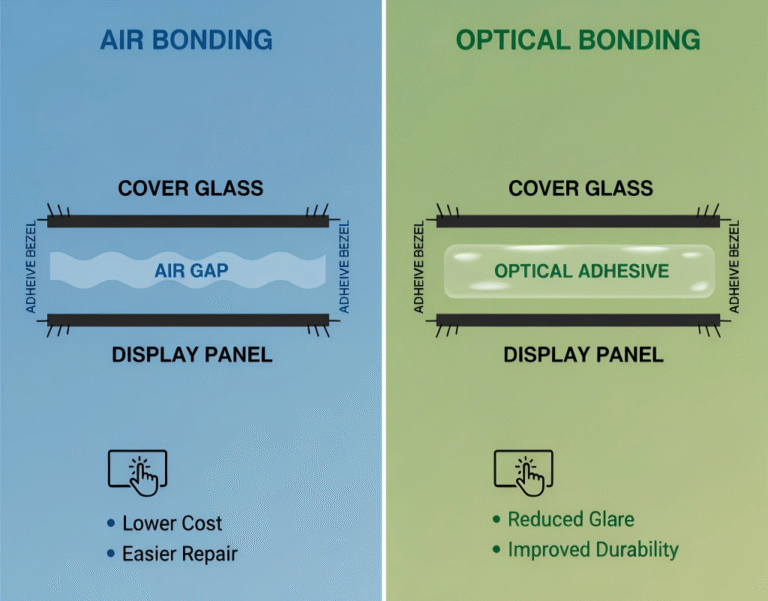
Air Bonding vs. Optical Bonding: How This Crucial Choice Impacts Your Touch Panel Performance
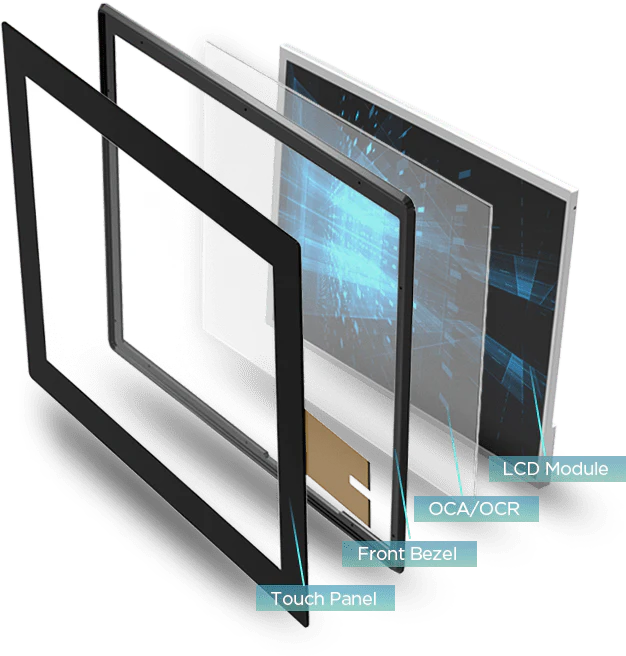
1. Defining the Architecture: What Happens Behind the Glass? To understand the difference, we must look at the cross-section of a modern […]

Display supplier &
Manufacturer
RJY knowledge center
Display engineering insights, product updates and practical guidance for building reliable connected products.
1. Defining the Architecture: What Happens Behind the Glass? To understand the difference, we must look at the cross-section of a modern […]
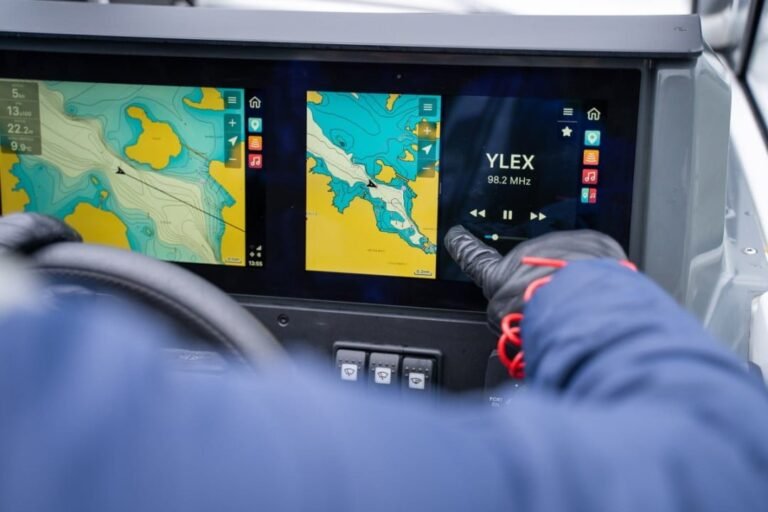
In the realm of high-tech hardware, the display is no longer a passive output window; it is the primary interface through which humans command machines. Whether it’s a surgical monitor in a sterile operating room or a control interface for a high-performance industrial robot, the touch panel has become the standard for intuitive interaction.
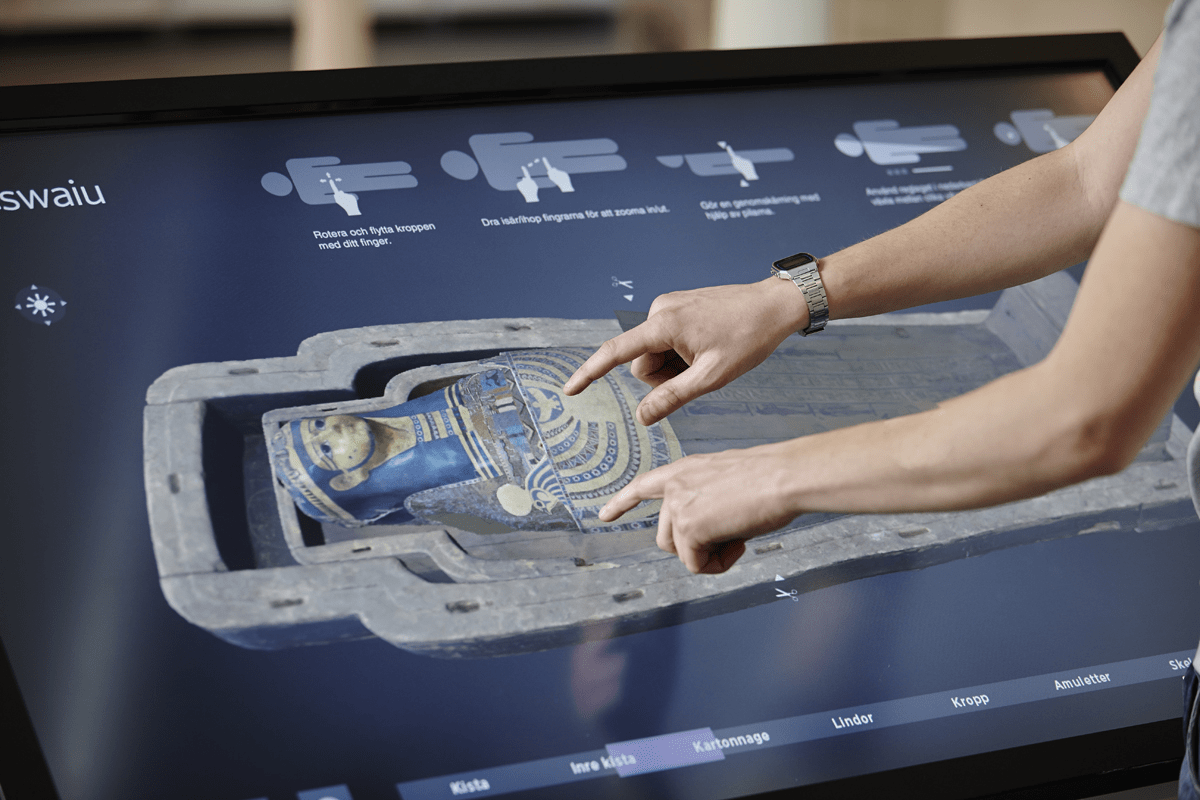
Touch screens have become an inseparable part of our daily lives—from the smartphones in our pockets to the kiosks we interact with at airports. However, not all touch displays are created equal. While consumer-grade displays prioritize aesthetics and affordability, industrial touch displays are engineered for durability, reliability, and long-term performance in harsh environments.
For engineers, product managers, or decision-makers evaluating which display technology to adopt, understanding the differences between industrial and consumer touch displays is essential. This article takes a deep dive into the technical, functional, and operational distinctions that set them apart.
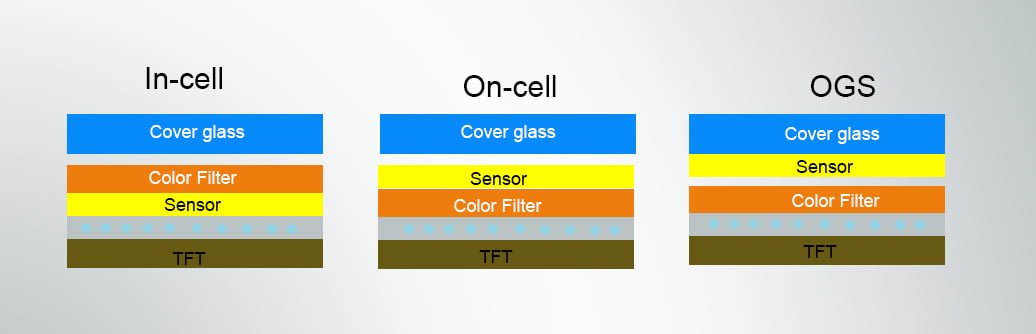
Touchscreens are everywhere—from smartphones and tablets to smart appliances and industrial machines. But not all touchscreens are created equal. You may have heard of terms like In-Cell, On-Cell, or OGS when browsing device specs or choosing a display for your project.
These names describe how the touchscreen layer is built into the display. Sounds technical? Don’t worry—we’ll walk you through each type in simple terms so you can understand how they work and which one might be best for your needs.
Display technology has evolved rapidly in recent years. In-cell, On-cell, and OGS (One Glass Solution) technologies are among the most significant innovations. These technologies have reshaped the design and performance of touchscreens in various devices, including consumer electronics and industrial systems.
When it comes to touchscreens, two of the most common technologies are capacitive touch screens and resistive touch screens. Both allow users […]
TFT display panel interface and its advantages and disadvantages TFT display are widely used in a variety of electronic devices, including smartphones, tablets, […]
Three touch technologies of LCD capacitive touch screen: In-Cell/ On-Cell/ OGS LCD touch screen structure The basic structure of ordinary LCD display […]
Capacitive Touch screen vs. Resistive Touch Screen: Technology Analysis, Performance Evaluation and Application Comparison Touch screen as a new input device, it […]
Introduction to the types of screen cover With the progress of science and technology and the diversification of consumer needs, the application […]
In the realm of modern digital devices, touch display technology has undoubtedly become the critical bridge for human-machine interaction. As two mainstream […]
LCD is a commonly used peripheral, and semiconductor manufacturers typically provide pre-written LCD interface driver programs for their chips. Developers don’t need […]