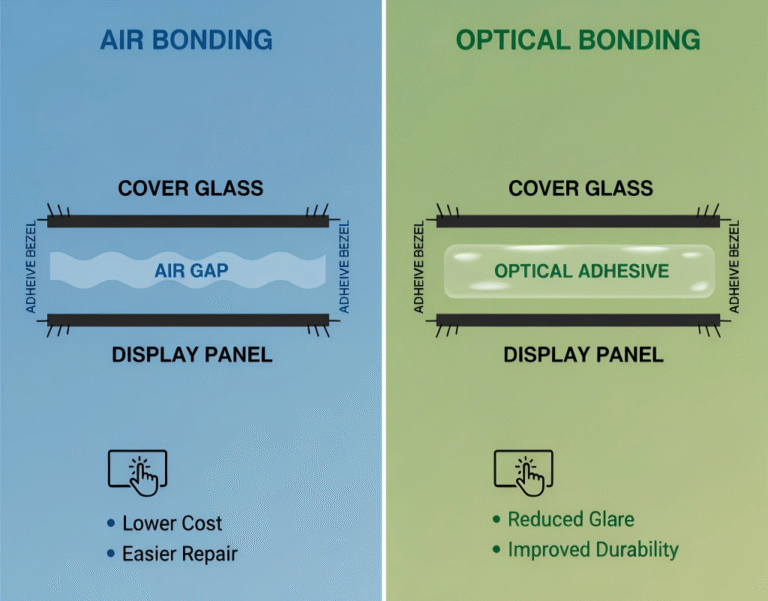
Air Bonding vs. Optical Bonding: How This Crucial Choice Impacts Your Touch Panel Performance
1. Defining the Architecture: What Happens Behind the Glass? To understand the difference, we must look at the cross-section of a modern […]

Display supplier &
Manufacturer
RJY knowledge center
Display engineering insights, product updates and practical guidance for building reliable connected products.
1. Defining the Architecture: What Happens Behind the Glass? To understand the difference, we must look at the cross-section of a modern […]
Separate Touch Connector: The First Clue Most touch-screen TFT modules include two separate connectors: If your TFT board only has a single […]
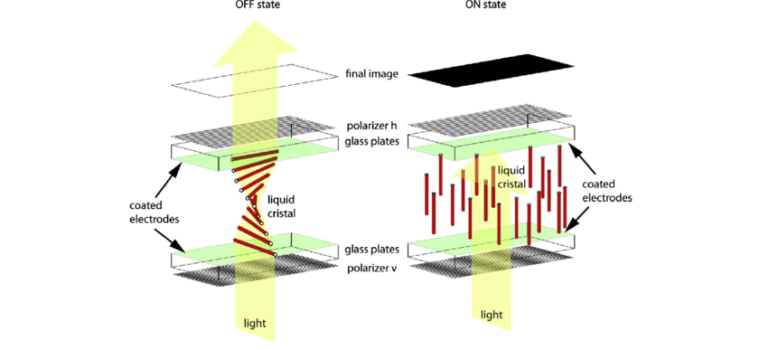
Twisted Nematic LCD, or TN LCD, is one of the most widely used display technologies in the world. Known for its fast response time and low manufacturing cost, TN LCDs have long been a staple in consumer electronics, industrial equipment, and gaming monitors. In this article, we’ll explain how TN LCDs work, their advantages and disadvantages, and how they compare with other types like IPS and VA.
In the fast-paced world of industrial automation and manufacturing, efficiency and precision are paramount. Industrial touch displays have become an essential tool for controlling and monitoring operations, offering a bridge between human operators and complex machinery. Unlike consumer-grade touchscreens, industrial touch displays are built to withstand the rigors of harsh environments, ensuring reliable performance under various conditions. This guide explores the ins and outs of industrial touch displays, their types, benefits, and how to choose the best one for your application.